The backstop that was supposed to bill data centers didn’t run.
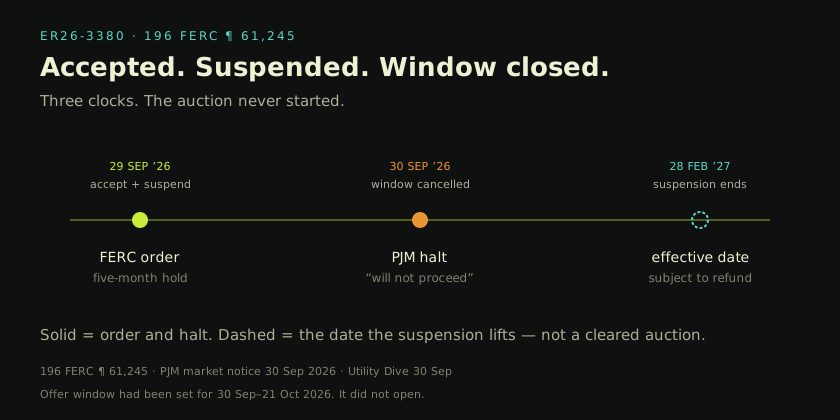
On 29 Sep 2026 FERC accepted PJM’s Reliability Backstop Procurement, then suspended it for five months to 28 Feb 2027, finding that cost allocation, LSE collateral, and Transmission Owner exit rules may be unjust and unreasonable. PJM did not open the 30 Sep–21 Oct offer window. The mechanism sold as making large load pay for the capacity it forces onto the system failed on the invoice.196 FERC ¶ 61,245PJM halt, 30 Sep
The window that didn’t open
It was supposed to open 30 Sep and run to 21 Oct. That was the bid for new capacity sized to a known shortfall. The day after the order, PJM said: “At this time, PJM will not proceed with the Reliability Backstop Procurement.” Milestones would be re-communicated later. One clock. It stopped.EnergyChoiceMatters, 30 SepUtility Dive, 30 Sep
As of 12 Oct there is still no new §205 refile on the public docket. The Market Implementation Committee’s 7 Oct administrative update came and went without a filed rewrite. Around that same week DOE filed a Notice of Intervention / Statement of Position backing FERC’s push on cost allocation. PJM is now pointing at a Special Members Committee around 22 Oct and a target refile near 29 Oct — clocks on the calendar, not an open auction.APPA, 2 OctAPPA / DOE, 11 Oct
What the backstop was
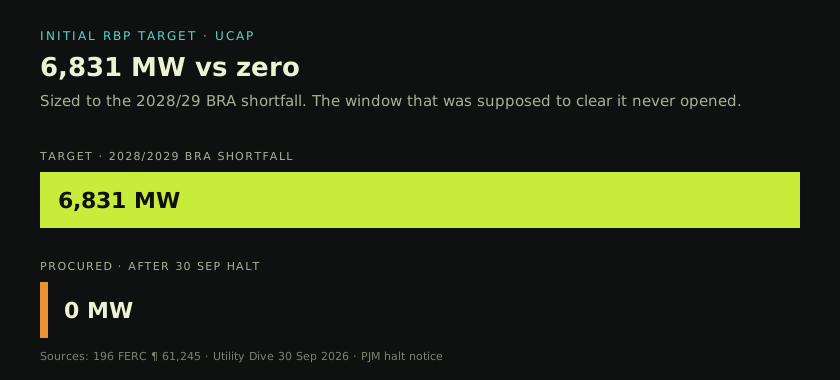
A one-time buy of new capacity. PJM sized the Initial RBP Target to the 6,831 MW UCAP shortfall from the 2028/2029 Base Residual Auction — the gap left after that auction cleared thin. Commitments were meant to run up to 15 years, starting as early as the 2028/2029 delivery year, with costs steered toward the large-load growth that helped create the shortfall.196 FERC ¶ 61,245Utility Dive, 30 Sep
That was the pitch: get new megawatts built, and put the bill closer to the campuses that forced the need. The procurement idea is what FERC left standing. The assignment of who pays is what it tore out.
What FERC pulled
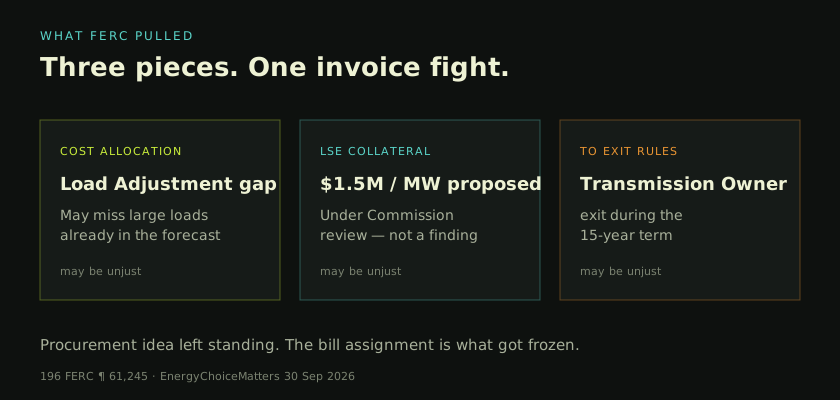
Not “more generation.” Three pieces.
First, cost allocation. PJM’s Load Adjustment “snapshot” may miss large loads already baked into the initial forecast, so the Initial RBP Target “may only capture a portion of new load growth,” and costs may not be “at least roughly commensurate” with benefits. FERC floated allocating off updated load forecasts instead.196 FERC ¶ 61,245
Second, LSE collateral. PJM proposed an initial RBP Credit Rate of $1.5 million per committed RBP MW — about half the estimated contractual value, under Commission review. FERC said PJM did not back the 50% estimate with quantitative default measures, and that the LSE collateral requirement may be unjust and unreasonable. NOVEC, in its protest, said a high-end collateral ask of about $1.95 billion would exceed its assets and that securing $2 billion was uncertain — that figure is the co-op’s protest, not a Commission finding.196 FERC ¶ 61,245EnergyChoiceMatters, 30 Sep
Third, Transmission Owner exit rules over the multi-year term. Same holding: may be unjust and unreasonable.
Chairman Swett’s concurrence called the last-minute filing a “mess” with “billion-dollar implications for consumers.” Commissioner See: customers that drive new costs should bear them; existing customers should not.Utility Dive / SwettSee concurrence
Where the bill goes while nothing runs
Capacity auctions already cleared are still in the stack. State retail tariffs still decide who eats wholesale capacity costs. There is still no refile on the table that names zones, LSEs, and collateral in a way that survives “roughly commensurate” — only a Members Committee date and a late-October target that have not yet produced a filed rewrite.
Until that filing lands and clears, the default path is the one the backstop was supposed to replace: scarcity socialized through the ordinary capacity construct, with large-load growth still arguing about who caused it. Households and non-large-load customers in PJM zones keep carrying the optionality by default. That is what “data centers will pay” sounds like when cost allocation dies first.
What to open
-
The refile clock
A new FPA §205 filing that fixes cost allocation, LSE collateral, and TO exit. PJM has floated a Special Members Committee around 22 Oct and a refile target near 29 Oct. FERC said a clean refile could obviate the paper hearing and expedite an auction. Watch the docket for the actual filing — not the calendar invite.
-
The paper hearing and §206
Order established both. If the late-October target slips, the Commission’s own record on those three issues is the next clock, with the suspension still running to 28 Feb 2027.
-
How load forecasts get used
FERC’s guidance points at updated load forecasts for allocation. DOE’s intervention lands on the same cost-allocation pressure. Ask whether the next snapshot captures the large loads the last one may have left out of the delta.
-
Who posts collateral
The $1.5M/MW rate is PJM’s proposal under review. Any refile that keeps crushing LSE collateral without quantitative support will hit the same wall.
So who eats it? Either a refile that names who caused the cost, or a shortfall that doesn’t. That’s the invoice.